
Board guide
How my boards are made, why the direction of the grain matters, and how to look after a board so it outlasts your knives.
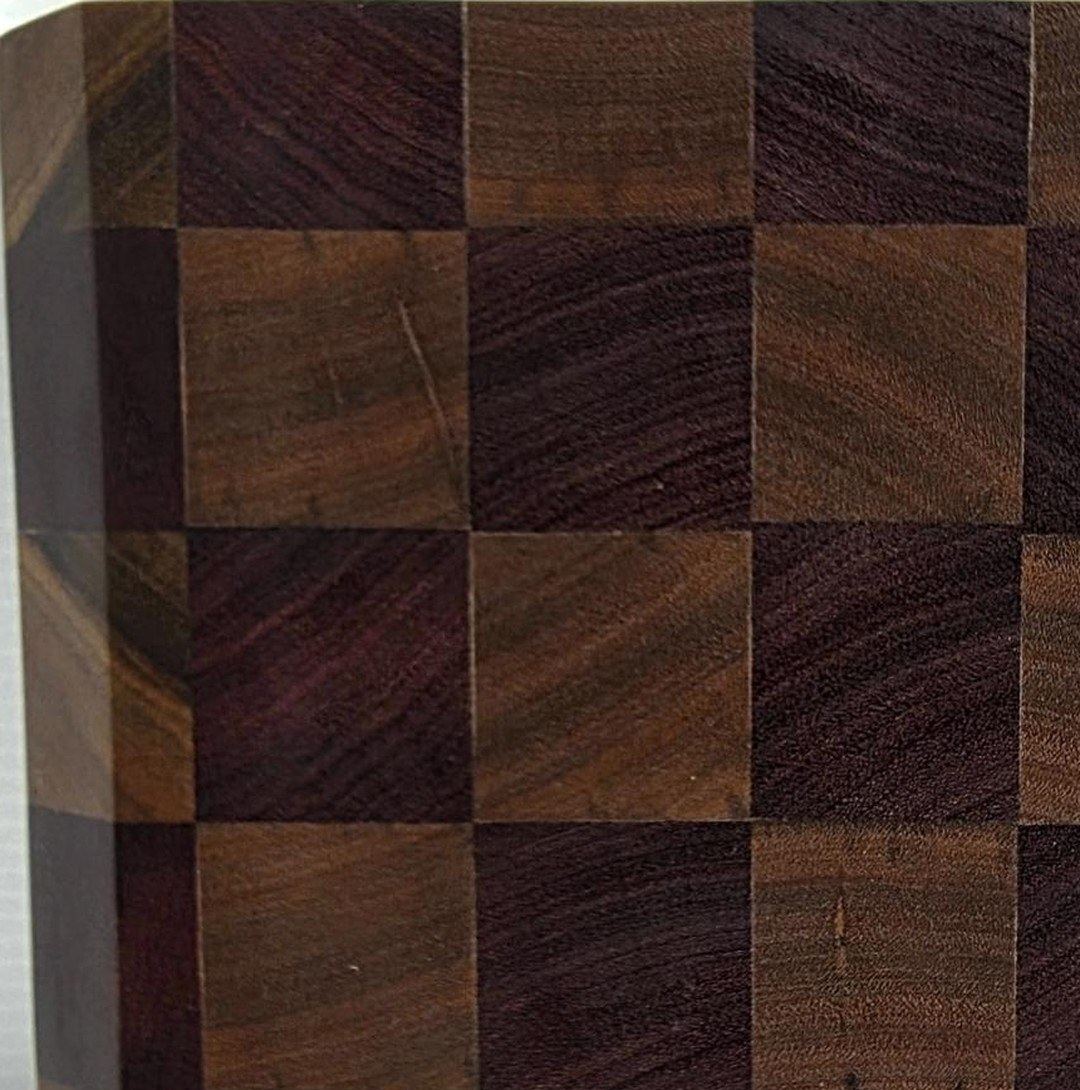
Face, edge or end grain
Think of timber as a bundle of drinking straws. Which side of the bundle faces up decides how the board behaves.
Face grain shows the wide, flat side of the plank. It shows off the figure best but marks easily, so it's best for serving.
Edge grain stands strips on their edges. The straws lie along the board, so it's tough, stable and easy to care for. Your knife slices across the fibres and leaves fine marks over time.
End grain points the ends of the straws up. The knife slips between the fibres rather than cutting them, so it stays sharper and marks close up. These boards take longer to make and drink more oil.
Wood vs other boards
I'm biased, obviously. Here's the honest comparison.
| Board | On your knife | Over time |
|---|---|---|
| Hardwood | Gentle, end grain especially | Can be sanded back and re-oiled for decades |
| Plastic | Fine at first | Gets scored, and the grooves are hard to clean properly |
| Glass or stone | Blunts an edge fast | Lasts forever, but your knives won't |
| Bamboo | Harder on edges than most hardwoods | Thin strips held together with a lot of glue; can't be refinished much |
| Acacia | Reasonable | Usually imported and mass-made; quality varies a lot |
Which timber?
I mostly use spotted gum, blackbutt, Tasmanian blackwood, Tasmanian oak and messmate. All are dense Australian hardwoods that hold up to daily chopping.
About the timberCare routine
Five minutes now and then keeps a board looking new.
- Wash it soonWarm water and a little dish soap straight after use. Don't leave food sitting on it.
- Dry it on its edgeWipe it down and stand it up so both faces dry evenly. A board drying flat can cup.
- No dishwasher, no soakingHeat and standing water split boards and break down the glue.
- Oil when it looks thirstyWhen the timber looks pale or dry, wipe on a thin coat of board oil and leave it overnight.
- Wax to sealRub in a little wax over the oil and buff it off. It helps water bead rather than soak in.
- Sand when marks build upA light sand with fine paper, then oil and wax again, and it's back to new.
What I use
I finish every board with Gilly's food-safe oil and wax, and I stock both, plus bamboo polishing cloths, in the shop.